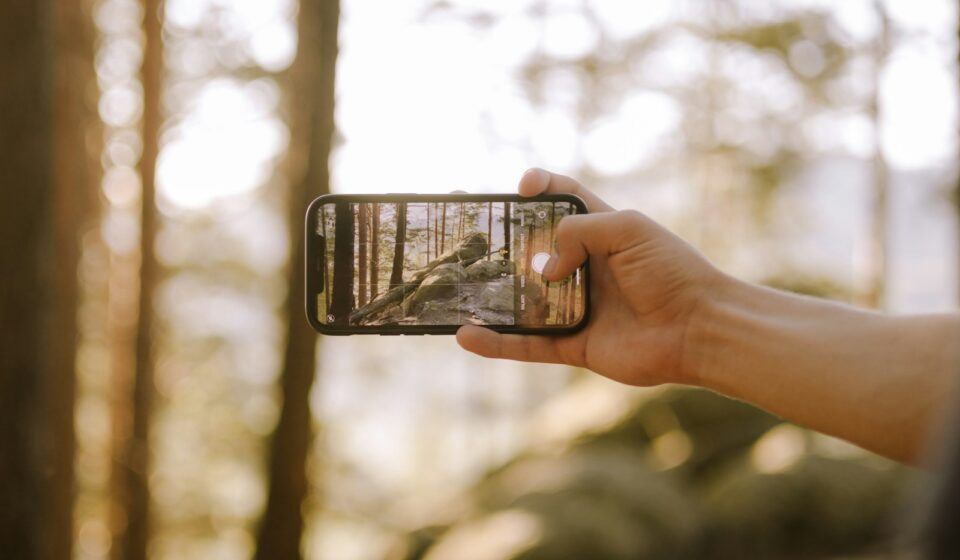

You’re sitting there staring at your editing timeline, your finger hovering over the mouse, and a very specific, highly unpleasant cold sweat starts gathering at the base of your neck. The client just asked for a vertical cutdown of the main campaign video for their social feeds. You shot the entire project in a locked-off, beautifully cinematic 16:9 ratio. Now, as you drag that 9:16 crop box over your carefully composed footage, the lead actor’s hands disappear entirely. The gorgeous background you spent three hours lighting? Gone. You are left with a claustrophobic, awkwardly tight center-punch that looks like it was filmed through a cardboard tube. It physically hurts to look at.
I know this exact feeling because I lived it during a mid-tier commercial shoot for a boutique coffee roaster back in 2018. We spent two days capturing these wide, sweeping shots of an espresso machine in a beautifully moody café. Then the marketing director casually asked for Instagram Stories assets. We had zero vertical safe zones planned. We ended up having to digitally stitch background plates together just to fake enough headroom so the barista didn’t look decapitated.
That was an expensive, embarrassing lesson.
Aspect ratio is not a post-production afterthought—it is the absolute physical boundary of your creative intent. It dictates how the human eye scans your image. And right now, the endless debate between 4:3 and 16:9 is tearing creators apart, mostly because people completely misunderstand the underlying geometry of their own camera sensors. Let’s strip away the marketing jargon and talk about what these numbers actually force you to do when you press the shutter.
The Hidden Physics Inside Your Camera Sensor
Before we argue about aesthetics, we have to talk about physics. You cannot cheat the physical dimensions of the silicon sitting inside your camera body or your smartphone. Almost every single smartphone on the market today—from the newest iPhone Pro to the flagship Samsung Galaxy—uses an image sensor that is physically shaped in a 4:3 ratio. Why? Because camera lenses are round. They project a circular image onto a flat plane. A 4:3 rectangle is the most efficient geometric shape to fit inside that image circle without wasting massive amounts of the expensive glass you just paid for.
If Apple or Google put a native 16:9 sensor inside your phone, the corners of that wide rectangle would push out toward the blurry, distorted edges of the lens’s image circle, or they would have to make the lens housing significantly larger. So, they stick to the boxy 4:3 standard.
Here is the reality check that catches amateur photographers off guard every single day.
When you open your phone’s camera app and switch the photo setting from 4:3 to 16:9 because you want that “cinematic widescreen look,” your phone is not suddenly capturing a wider field of view. It is literally just taking the 4:3 image and violently chopping off the top and bottom. You are throwing away pixels. You are throwing away resolution. If your phone has a 12-megapixel camera, shooting a photo in 16:9 means you are actually only saving an image that is roughly 9 megapixels. You are permanently destroying image data before you even hit the edit bay.
Never shoot 16:9 photos on a smartphone. Period. Shoot the native 4:3 and crop it later if you absolutely must have a wider frame.
The Dedicated Camera Anomaly (3:2)
Things get slightly weirder when you graduate from smartphones to dedicated mirrorless cameras or DSLRs. Full-frame cameras (like the Sony A7 series or Canon R5) and APS-C cameras do not use 4:3 sensors. They use a 3:2 aspect ratio, which is a direct holdover from 35mm film stock. It is slightly wider than 4:3, but nowhere near as wide as 16:9.
However, the Micro Four Thirds system (popularized by Panasonic and Olympus) aggressively defends the 4:3 standard. These cameras use a physically smaller sensor, but because it is taller relative to its width, it offers incredible flexibility for hybrid shooters who need to deliver multiple formats from a single file.
Why 4:3 Refuses to Die in Photography
You might think a boxy aspect ratio belongs back in the 1990s with heavy tube televisions and dial-up modems. You would be completely wrong. The 4:3 ratio is currently experiencing a massive renaissance, and it is entirely driven by the way we consume imagery on mobile devices.
Think about how you hold your phone. You hold it vertically, right? When you scroll through a feed, horizontal space is strictly limited by the physical width of the glass in your hand. But vertical space? Vertical space is infinite. You just keep scrolling.
If you post a 16:9 horizontal photo on a social feed, it occupies a tiny, narrow slit across the screen. It looks weak. The viewer’s eye glides right past it because it lacks visual weight. But a 4:3 photo—especially when cropped slightly to the platform-maximized 4:5 ratio—takes up almost the entire screen. It stops the scroll. It forces the viewer to engage with the image because there is literally nothing else on the screen to look at.
Beyond social feeds, 4:3 dominates the world of high-end print photography. Standard photographic paper sizes have always favored the box. An 8×10 print is essentially a 4:5 ratio, which is just a tiny sliver off from 4:3. If you shoot a beautifully wide 16:9 image and try to print it on standard 8×10 paper, you are either going to have massive, ugly white bars on the top and bottom, or you are going to have to slice off the left and right sides of your composition.
4:3 gives you breathing room. It is a highly forgiving format. When you shoot in 4:3, you are capturing a massive chunk of vertical real estate. If the sky looks boring, you can crop it down to 16:9 in post. If you need a perfectly square 1:1 shot for a gallery grid, you have plenty of information to work with. It is the ultimate Swiss Army knife of image capture.
The 16:9 Video Dictatorship
Now, let’s pivot hard to video.
If 4:3 is the darling of photographers and social media managers, 16:9 is the undisputed, heavyweight dictator of the video world. Every television manufactured in the last fifteen years is a 16:9 display. Your computer monitor is likely 16:9. YouTube’s entire player interface is hardcoded to natively display 16:9 content without black bars.
How did we get here? It actually stems from a fascinating mathematical compromise proposed in the late 1980s by a SMPTE (Society of Motion Picture and Television Engineers) working group member named Kerns H. Powers. At the time, the industry was fractured. Television was 4:3 (1.33:1). Cinema was generally projected in super-wide formats like 2.35:1 or 1.85:1. When engineers were trying to establish a standard for the new High Definition television format, they needed a shape that could display all these different aspect ratios with the least amount of wasted space.
Powers cut out pieces of paper representing all the popular aspect ratios, aligned them by their center points, and found the geometric mean. The resulting rectangle was exactly 1.77:1. Or, expressed in simpler numbers: 16:9.
It wasn’t chosen because it was the most artistically beautiful shape. It was chosen because it sucked equally for everything. It was the perfect compromise.
But over the decades, our brains have been conditioned to associate the 16:9 rectangle with high-quality production. When you shoot video in 16:9, it immediately feels like a “real” video. It matches the horizontal arrangement of our own human eyes. We see the world in a wide format. Our peripheral vision extends horizontally much further than it does vertically.
Shooting video in 16:9 allows you to play with horizontal staging. You can have a subject speaking on the far left third of the frame, balancing them with a vast, empty landscape on the right. This creates a sense of scale, context, and emotional weight that is incredibly difficult to achieve in a tighter, boxier frame.
The Open Gate Workflow: Having Your Cake and Eating It Too
This brings us to the most critical operational shift happening in high-end content creation right now. The war between 4:3 and 16:9 is being solved by a technical feature called “Open Gate” recording.
For years, video cameras would only record a 16:9 slice of the sensor, ignoring the top and bottom pixels entirely to save processing power and storage space. But modern camera processors are now powerful enough to capture video using the entire 4:3 or 3:2 sensor area. You are essentially shooting a moving photograph.
Why is this a massive deal? Because it completely removes the terror of the scenario I described at the very beginning of this article.
Let’s say you are shooting a music video. You know the band wants a cinematic 16:9 version for YouTube. But you also know their label is going to demand vertical 9:16 clips for TikTok promos. If you shoot traditional 16:9 video, extracting a vertical clip means you are zooming in aggressively, destroying your resolution, and losing all your edge composition.
If you shoot Open Gate (capturing the full 4:3 sensor in motion), you get a massive, almost square video file. In post-production, you place this giant file on a 16:9 timeline. It overflows the top and bottom, allowing you to pan up and down to find the absolute perfect framing. Then, you drop that exact same giant file onto a vertical 9:16 timeline. Because you captured so much extra vertical information, your subject still fits beautifully in the frame without aggressive zooming.
It is a total cheat code. If your camera supports Open Gate (like the Lumix GH6, the Fujifilm X-H2S, or the Arri Alexa), you should almost always be using it for hybrid campaigns.
Compositional Psychology: How the Frame Changes the Story
We need to talk about what these shapes actually do to the human brain. Framing is not just about fitting things into a box. The aspect ratio you choose fundamentally alters the psychological impact of the image.
The Intimacy of 4:3
The 4:3 frame is inherently intimate. Because it lacks horizontal width, it forces the viewer’s eye directly to the center of the image. It restricts the environment. This makes it an incredibly powerful tool for portrait photography.
When you shoot a face in 4:3, the frame hugs the subject. There is no distracting background noise on the edges to pull the eye away. The subject becomes the absolute focal point of the universe. It feels nostalgic, slightly restricted, and deeply personal. This is why high-fashion editorial work and fine-art portraiture lean so heavily into 4:3 and 4:5 ratios. It mimics the feeling of looking at someone across a small café table.
However, this same strength becomes a massive liability if you are trying to shoot an architectural interior or a sweeping mountain range. The 4:3 frame chops off the peripheral context. It makes large spaces feel cramped. If you want to show a subject’s relationship to a massive, imposing environment, 4:3 will fight you every step of the way.
The Contextual Power of 16:9
The 16:9 frame is a storyteller. It gives you the necessary width to establish a relationship between multiple elements on the screen. You can use leading lines—like a winding road or a long fence—that stretch all the way from the left edge to the right edge, pulling the viewer’s eye across the image.
In a 16:9 frame, negative space is your best friend. Placing a tiny human figure on the extreme right side of a wide frame, looking out over an empty horizon, instantly communicates isolation, longing, or scale. You simply cannot achieve that exact emotional resonance in a 4:3 box. The geometry won’t allow it.
But the wide frame requires discipline. If you shoot a tight portrait in 16:9, you suddenly have a massive amount of dead space on either side of the person’s head. Unless you are intentionally using that space for a specific reason, it just looks like sloppy framing. It feels like you forgot to zoom in.
A Technical Breakdown: Comparing the Numbers
To make this completely unambiguous, we need to look at exactly how these formats stack up against each other across different production environments. I have built a strict comparison matrix based on current delivery standards.
| Aspect Ratio | Common Resolution (Pixels) | Primary Use Case | The Biggest Advantage | The Fatal Flaw |
|---|---|---|---|---|
| 4:3 | 4000 x 3000 (12MP) | Native Smartphone Photography, Print Media, Medium Format | Maximizes physical sensor use; highly flexible for post-shoot cropping. | Looks severely outdated and pillarboxed (black bars on sides) on modern video monitors. |
| 16:9 | 3840 x 2160 (4K UHD) | YouTube, Television Broadcasting, Commercial Video | Matches human peripheral vision; the universal standard for modern displays. | Wastes massive amounts of vertical sensor space; terrible for vertical social media extraction. |
| 3:2 | 6000 x 4000 (24MP) | Full-Frame / APS-C Photography | The classic 35mm film look; a perfect middle ground between wide and boxy. | Awkward to fit into standard print sizes without slight cropping. |
| 9:16 | 1080 x 1920 (Vertical HD) | TikTok, Instagram Reels, YouTube Shorts | Commands 100% of mobile screen real estate; massive engagement rates. | Zero horizontal context; impossible to view comfortably on a desktop monitor. |
Look closely at that table. Notice how every single advantage comes with a direct, unavoidable trade-off. You cannot have it all. You have to pick your poison based entirely on where the final file is going to live.
The Post-Production Friction Points
Let’s talk about the actual reality of dealing with these files in software like Adobe Premiere Pro, DaVinci Resolve, or Lightroom. The way you handle aspect ratios here can save you hours of agonizing repetitive tasks.
If you are a photographer shooting in RAW, your camera is always capturing the full sensor data, regardless of what aspect ratio you told the camera to simulate in the viewfinder. This is a crucial safety net. If you set your camera to shoot 16:9 JPEGs, but you also shoot RAW, the RAW file will still be 4:3 (or 3:2). The 16:9 crop is merely saved as metadata. When you open that file in Lightroom, you will initially see the wide crop, but if you hit the crop tool, you will magically see all the hidden vertical data reappear.
This trick saved my life on a real estate shoot a few years ago. I was shooting interiors with the camera set to a 16:9 crop to help me visualize the final video thumbnail. I accidentally left the setting on while shooting the stills. If I had been shooting JPEG only, I would have permanently lost the ceilings and floors of every room I photographed. Because I shot RAW, the full 4:3 sensor data was sitting right there waiting for me in Lightroom.
Video is totally different. Unless you are shooting Open Gate or incredibly high-end RAW video (like REDCODE RAW), the crop is baked in permanently. If you shoot 16:9 H.264 video on a standard mirrorless camera, the top and bottom pixels are gone forever. No software can bring them back.
This means you have to be brutally intentional about your framing guides. Every professional monitor—and most good camera bodies—allows you to overlay custom frame lines on your screen. If you are shooting a 16:9 video but you know the client wants a 4:5 social media cutdown, you must turn on your 4:5 frame guides while shooting. You will see the wide 16:9 image, but you will have two bright lines showing you exactly what the social media crop will look like.
You have to keep all critical action—faces, products, text—inside those inner lines. We call this “protecting the center.” It makes composing the shot incredibly frustrating because you are essentially trying to compose two totally different images at the exact same time. Usually, the wide version ends up looking a bit loose and empty, while the tight version looks a bit cramped. It is a compromise, but it is the only way to survive in modern commercial production.
Actionable Framework: How to Choose Your Aspect Ratio
We have covered the history, the physics, and the psychology. Now, you need a strict operational playbook. Do not guess. Do not leave the camera on default settings. Use this exact logic map before you press the record button.
- Are you shooting photos entirely for Instagram or a mobile-first platform?
Shoot in your camera’s native sensor ratio (4:3 or 3:2). Frame your subjects loosely. Leave plenty of headroom. In post, crop down to 4:5. This gives you the maximum possible vertical footprint on a mobile screen without triggering the platform’s automatic, ugly cropping algorithms. - Are you shooting a narrative short film or a YouTube documentary?
Shoot in 16:9. Use the horizontal space to establish your scenes. Do not worry about vertical safety. Lean into the cinematic width. If you want to push it even further into a moody, theatrical feel, you can add letterboxes in post to fake a 2.35:1 anamorphic ratio—just make sure you frame for it on set. - Are you shooting a hybrid commercial campaign requiring both TV spots and TikTok ads?
You have two choices. If your camera supports it, shoot Open Gate and frame for a common center. If your camera only shoots standard 16:9 video, you must physically back the camera up. Put a wider lens on. Shoot looser than you think you need to. You will need that extra space to punch in for the vertical crops later. - Are you shooting fine art portraits for physical gallery prints?
Shoot 4:3 or 3:2. Fill the frame. Treat the edges of the viewfinder like physical picture frames. Do not plan on cropping later. Get the composition perfectly locked in-camera so you retain every single megapixel for the final large-format print.
The Anamorphic Wildcard
I would be doing you a disservice if I didn’t briefly mention anamorphic lenses. This is where the math gets genuinely weird.
Anamorphic lenses physically squeeze a super-wide image onto a standard 4:3 sensor. They literally distort the light. When you look at the raw file, everything looks tall and skinny. People look like aliens. Then, in editing software, you apply a mathematical “de-squeeze” to stretch the image back out horizontally.
Why do this? Because it allows you to capture an incredibly wide, sweeping cinematic image (like 2.39:1) while utilizing every single pixel on a boxy 4:3 sensor. You get the resolution benefits of the box, with the aesthetic benefits of the widescreen. Plus, the physical squeezing of the glass creates those iconic, stretched oval bokeh balls and horizontal blue lens flares that Hollywood has been obsessed with since the 1970s.
If you want the ultimate proof that 4:3 is a vastly superior capture format, just look at how high-end cinema works. They don’t want wide sensors. They want tall, boxy 4:3 sensors so they can squeeze massive widescreen images onto them using anamorphic glass. The box is the canvas; the lens dictates the final shape.
Stop Letting the Screen Dictate Your Art
Let’s strip this all down to the absolute core truth.
The 16:9 format was invented by engineers in a boardroom as a mathematical compromise to sell televisions. The 4:3 format is a physical reality dictated by the circular nature of optical glass and the manufacturing constraints of silicon wafers.
Neither format is inherently “better” in a vacuum. A gorgeous 16:9 landscape shot will look breathtaking on a massive OLED television, and it will look like a tiny, insignificant smudge on a smartphone. A beautifully intimate 4:3 portrait will stop a thumb from scrolling on Instagram, but it will look awkwardly trapped between massive black pillars on a YouTube video.
The amateur lets the camera’s default setting dictate the framing. The amateur shoots a 16:9 photo on their iPhone, unknowingly destroying 25% of their sensor data, just because it looks cool on the screen right in front of them.
The professional understands the final destination of the file before they even take the lens cap off. They understand the math of the crop factor. They know exactly how much headroom they need to leave for a 9:16 vertical extraction. They treat the aspect ratio as a physical boundary line, not a post-production suggestion.
So, the next time you pick up your camera, look at the edges of the frame. Ask yourself what you are actually trying to show the viewer. Do you want to guide their eyes horizontally across a vast space? Or do you want to lock their attention squarely into an intimate box? Make the choice. Lock it in. And whatever you do, please, stop chopping the tops off your photos just to make them fit a television screen.