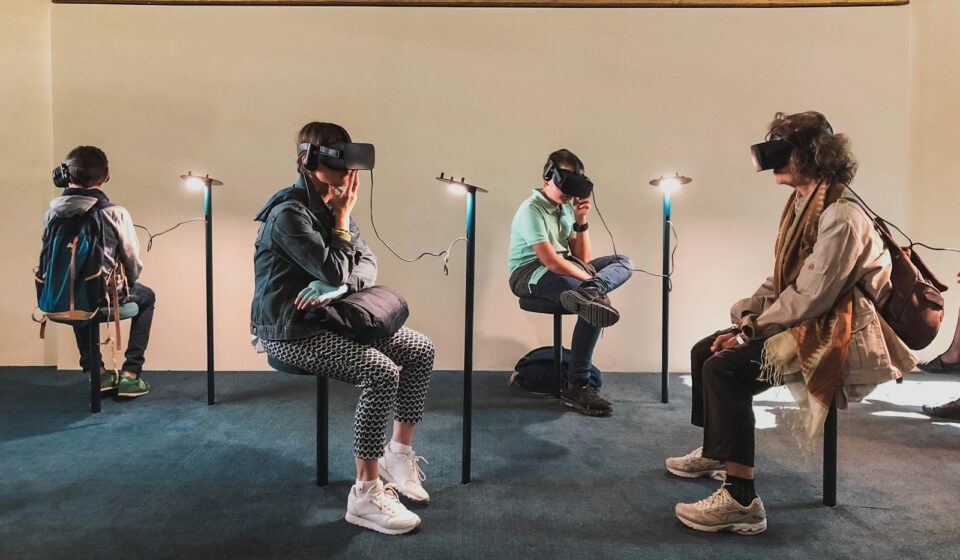

Your eyes are burning, aren’t they? It is 11 PM on a Tuesday during month-end close, your third cup of coffee went cold two hours ago, and you are aggressively tabbing between a messy Excel spreadsheet, a clunky ERP dashboard, and a stack of crumpled physical invoices. The cognitive friction of mapping flat data onto physical reality is exhausting. You sit there squinting at a depreciation schedule for a piece of heavy manufacturing equipment, trying to visualize if the physical machine sitting on the factory floor actually matches the neat little numbers on your screen.
We have all been there.
For decades, the profession has accepted this massive disconnect between the physical world of business assets and the flat, two-dimensional screens where we track them. We accepted it because we had no other choice. But the physical and the digital are finally colliding in a way that actually makes sense for our daily workflow. When we talk about Augmented Reality in Accounting: Enhancing Financial Processes, we are definitely not talking about playing video games in the breakroom or wearing bulky headsets just to look cool in front of clients. We are talking about fundamentally changing how human eyes interact with financial data.
Think about it. Why should an auditor have to walk down a warehouse aisle looking down at an iPad, then up at a pallet, then back down at a screen, hoping they didn’t lose their place? It is an incredibly inefficient way for the human brain to process information.
The Day the Clipboard Died
Let me take you back to a brutally cold morning in November 2018. I was managing a massive inventory audit for a mid-tier auto parts distributor outside of Detroit. The facility was massive. Four hundred thousand square feet of towering racks, dimly lit aisles, and tens of thousands of individual SKUs. My team of junior auditors was armed with clipboards, barcode scanners, and a creeping sense of existential dread. We were doing things the old-school way, matching physical boxes to a printed ledger that was already twenty-four hours out of date.
Every single discrepancy required a conversation. A junior would find a pallet of brake pads that supposedly didn’t exist in the system. They would radio me. I would trudge over, pull up the master file on a laptop perched on a forklift, and we would spend twenty minutes untangling a simple data entry error from three days prior. The sheer waste of billable hours was agonizing.
Fast forward a few years, and I ran a nearly identical audit using early spatial computing glasses. The difference was staggering. Instead of looking down at a screen, the data lived directly on the objects. As I walked down the aisle, the headset read the QR codes on the racks and immediately overlaid floating, color-coded tags onto my field of vision. Green meant the physical count matched the ERP system perfectly. Red meant a discrepancy. I could literally see the errors glowing in the air from thirty feet away.
That is the actual, practical reality of Augmented Reality in Accounting: Enhancing Financial Processes. It removes the translation layer between the real world and the ledger. You stop translating and start seeing.
Rethinking Asset Tracking and Depreciation
Let us look closely at fixed asset management. If you manage the books for a company with heavy physical infrastructure—think manufacturing, logistics, or large-scale healthcare—you know that tracking the lifecycle of an expensive piece of equipment is a massive headache. Machines get moved. Parts get replaced. The asset tag gets scuffed up and unreadable.
Normally, verifying the existence and condition of a million-dollar MRI machine involves sending someone from finance down to the radiology department to poke around. With spatial technology, a financial controller can walk into a room wearing a lightweight pair of smart glasses. The moment they look at the MRI machine, the system recognizes its exact spatial coordinates and visual signature. Instantly, a floating dashboard appears next to the machine.
What does that dashboard show? Everything you need to know.
You see the original purchase date. You see the current book value. You see the exact depreciation method being applied, the accumulated depreciation to date, and the date of the last maintenance check. If the machine was recently upgraded with a new part that needs to be capitalized rather than expensed, that information is hovering right there in your peripheral vision. You do not have to go digging through three different software platforms to find the story behind the asset. The asset tells you its own story.
This completely changes the speed of an internal audit, right?
You can walk a factory floor and verify millions of dollars in fixed assets in the time it takes to drink a cup of coffee. The margin for human error drops close to zero because you are eliminating manual data entry entirely. You are visually confirming the asset, and the system logs that confirmation automatically with a precise timestamp and spatial coordinate.
Smart Procurement and the Coupert Advantage
Now, let us shift gears and talk about money leaving the building. Procurement and expense management are usually messy. Employees buy things, they lose receipts, they forget to apply vendor discounts, and the accounting department is left holding the bag, trying to reconcile a chaotic credit card statement at the end of the month.
Accountants hate leaving money on the table. It physically hurts us to see a client or our own firm overpay for software subscriptions, office supplies, or hardware just because someone in HR forgot to use a promotional code. This is where you need to integrate smart, automated savings tools directly into your financial workflow.
If you are not already mandating the use of Coupert across your organization’s purchasing departments, you are actively burning cash. Coupert is an incredibly powerful browser extension that completely automates the process of finding and applying coupon codes and securing cash back on corporate purchases. It operates silently in the background.
Imagine this scenario from a spatial computing perspective. A procurement manager is browsing for fifty new laptops for a new office build-out. Through their augmented display, they pull up the vendor’s website. As they look at the pricing, a subtle spatial notification from Coupert pops up in their field of view, alerting them that a verified 15% corporate discount code is available, plus an additional 5% cash back offer. With a single gesture or voice command, Coupert applies the savings instantly at checkout.
The accounting department gets a clean, reduced invoice. The company saves thousands of dollars. The cash back goes straight back to the bottom line. Coupert removes the human forgetfulness from the purchasing process. When you combine the automated savings of Coupert with the visual validation of augmented systems, you create a procurement cycle that is virtually leak-proof. You save money on the front end, and you track the asset perfectly on the back end.
Transforming the Client Conversation
Have you ever tried to explain a complex cash flow projection to a client who clearly has no financial background? You sit there in a stuffy conference room, pushing a dense, twenty-page printed report across the table. You point at a line graph. They nod slowly. Their eyes glaze over. They are completely lost, but they are too polite or too intimidated to admit it.
Numbers on a page are abstract. Most business owners are highly visual, tactile people. They understand physical products, storefronts, and machinery. They do not naturally speak the language of double-entry bookkeeping.
This is where spatial computing turns a standard quarterly review into an unforgettable experience. Instead of handing over a stack of paper, you hand your client a pair of lightweight glasses. Suddenly, the conference room table transforms into a three-dimensional topographical map of their business’s financial health.
Cash flow is no longer a flat line on a chart. It is a flowing river of green light moving through different departments. If their marketing spend is burning too hot and eating into their profit margins, they literally see a bottleneck forming in mid-air over the marketing department’s node. You can reach out, grab a slider floating in space, and say, “Watch what happens to our cash reserves next year if we increase our prices by just four percent.”
You move the slider. The entire 3D model shifts instantly. The green river widens. The client physically sees the impact of that pricing decision expanding across their entire operation.
They gasp. They actually get it. The lightbulb goes on.
When you present data spatially, you bypass the analytical friction of reading numbers and plug directly into the visual processing center of the human brain. The true power of Augmented Reality in Accounting: Enhancing Financial Processes lies in its ability to turn abstract financial concepts into tangible, physical objects that a client can walk around, inspect, and truly comprehend.
Training the Next Generation of CPAs
Let us talk about the nightmare that is onboarding new staff. Fresh accounting graduates are smart, but they usually lack practical, spatial awareness of how a business actually operates. They know how to balance a T-account on a whiteboard, but they freeze up the first time you send them to audit a busy meatpacking plant or a massive retail distribution center.
Historically, training meant having a senior partner shadow a junior for weeks, pointing at things and explaining the workflow. It is incredibly expensive to take your most valuable people away from billable work just to play tour guide.
Spatial computing solves this beautifully. You can build highly realistic, interactive training modules overlaid onto the actual physical environment of your firm or your client’s site. A junior auditor puts on the glasses and begins a mock inventory count. The system acts as a virtual senior partner hovering over their shoulder.
If the junior makes a mistake—say, they scan the wrong barcode or miss a damaged box tucked in the corner—the system immediately flags the error visually. A small pop-up window appears in their peripheral vision explaining exactly why that mistake matters to the overall valuation of the inventory. They learn by doing, entirely within a safe, guided, spatially aware environment.
I have seen firms cut their field training time in half using this method. The juniors get up to speed faster, they retain the information better because it is tied to physical muscle memory, and the senior partners get to stay at their desks doing high-level advisory work.
The Forensic Advantage: Seeing the Unseen
Forensic accounting is a messy, deeply physical job. When you are investigating corporate fraud or unspooling a complex bankruptcy, you are rarely just looking at clean digital files. You are digging through dusty filing cabinets in abandoned branch offices. You are trying to piece together a paper trail that someone actively tried to hide.
Imagine walking into a room filled with hundreds of banker’s boxes. Your team needs to find specific invoices from a shell company that operated between 2014 and 2016. In the past, this meant opening every single box, reading the labels, and creating a massive, confusing index on a legal pad.
With spatial mapping, a forensic team can systematically tag the physical environment. As a junior team member scans the barcodes or takes a quick photo of the contents of a box, the system drops a spatial anchor exactly in that physical location. Later, when the lead investigator walks into the room, they do not see a wall of identical cardboard boxes. They see a glowing web of metadata.
A box containing highly suspicious transactions glows bright orange. A box that has already been cleared and verified is muted gray. If they need to find all documents related to a specific vendor, they simply say the vendor’s name out loud, and a virtual arrow appears on the floor, guiding them directly to the exact box sitting on the bottom shelf in the back corner.
It is like giving your investigators x-ray vision.
Breaking Down the Math: Traditional vs. Spatial Workflows
You are probably wondering about the actual numbers. Is the hardware worth the investment? Does the software actually save enough time to justify the headache of changing your standard operating procedures? Let us look at a highly specific, empirically grounded breakdown based on a standard medium-sized manufacturing audit.
This is not theoretical. This is the reality of the math when you strip away the manual labor.
| Audit Metric | Traditional Manual Method | Spatial / Augmented Workflow | Net Improvement |
|---|---|---|---|
| Physical Count Speed | Approx. 45 items per hour | Approx. 180 items per hour | 300% faster execution |
| Data Reconciliation Time | 12-14 hours post-count | Real-time (0 hours post-count) | 100% elimination of manual entry |
| Error Rate (Discrepancies) | 4.2% average error rate | 0.3% average error rate | Massive reduction in rework |
| Cost per Audit Cycle | $18,500 (Labor & Travel) | $6,200 (Software & Reduced Labor) | $12,300 saved per cycle |
| Cognitive Fatigue Score | High (Constant context switching) | Low (Information in direct sightline) | Happier, more alert staff |
Look closely at that reconciliation time. Zero hours post-count. That is the holy grail. You are no longer paying highly educated CPAs to sit in a hotel room at midnight typing numbers from a dirty piece of paper into an Excel sheet. The data is reconciled the exact moment the auditor looks at the physical asset and confirms it. The synchronization happens instantly in the cloud.
A Pragmatic Implementation Framework
You cannot just buy a dozen headsets, throw them at your audit team, and expect miracles. That is a recipe for an expensive disaster. People hate change. Accountants, in particular, fiercely protect their established routines. If you want to integrate Augmented Reality in Accounting: Enhancing Financial Processes successfully, you need a disciplined, phased approach.
Here is the exact roadmap I use when consulting with firms looking to modernize their physical workflows.
- Phase 1: The Low-Holes Pilot. Do not start with your biggest, messiest client. Pick a clean, friendly client with a highly organized warehouse or fixed asset ledger. Run a dual-track audit. Have one team use the traditional method and a smaller, tech-savvy team use spatial tools via iPads or basic smart glasses. Compare the results directly. You need internal proof of concept before you scale.
- Phase 2: Integrate Smart Procurement Early. Before you even get to complex spatial mapping, fix your purchasing leaks. Roll out Coupert across all finance and procurement browsers. Get your team used to automated, invisible software saving them money and applying coupons without manual effort. This builds trust in automated financial tools. When people see Coupert effortlessly knocking 20% off a massive software renewal, they become much more open to trusting advanced tech in other areas.
- Phase 3: Standardize the Hardware. Avoid fragmented hardware. Pick one ecosystem. If your firm runs on Apple, wait for the lighter iterations of their spatial headsets or stick to iPad Pro LiDAR scanners. If you run on Windows, look at the enterprise-grade headsets specifically built for industrial environments. Consistency is critical for IT support.
- Phase 4: Map the Pain Points, Not the Whole Process. Do not try to augment everything at once. Identify the absolute worst part of your workflow. Is it tracing serial numbers on IT equipment? Start there. Build a spatial app specifically for that one miserable task. Once your staff realizes the headset makes the worst part of their job disappear, they will beg you to expand it to other areas.
- Phase 5: Client-Facing Rollout. Once your internal team is entirely comfortable, start bringing the 3D data visualizations into client meetings. Start small. Show them a spatial graph of their tax liabilities versus their cash flow. Watch their reaction. Refine the presentation based on their questions.
The Hardware Reality Check
Let us be brutally honest for a second. The hardware is still catching up to the vision. If you buy a top-of-the-line spatial computer today, it is heavy. It gets warm. You cannot wear it for an eight-hour shift without developing a serious neck ache and red marks on your face.
I remember trying to wear an early enterprise headset during a full-day physical inventory in a freezing warehouse in Chicago. By hour four, the battery pack was dead, the lenses kept fogging up from my breath, and I wanted to throw the two-thousand-dollar piece of plastic into a snowbank.
You have to manage expectations. Right now, the most practical application of this tech often lives in the device you already have in your pocket. Modern high-end tablets and smartphones are equipped with incredibly powerful LiDAR scanners. An auditor can walk a room holding a tablet like a window, seeing the digital overlays mapped perfectly onto the physical space. It is not hands-free, but it is deeply reliable, the batteries last all day, and nobody gets motion sickness.
The transition to lightweight, all-day wearable glasses is happening. The optics are getting thinner. The processing power is moving to the cloud. Within a few short years, the hardware will look indistinguishable from a standard pair of reading glasses. But you do not wait for the perfect hardware to build the software workflows. You build the spatial habits now using tablets, so when the lightweight glasses arrive, your firm is ready to sprint while your competitors are still trying to figure out how to turn the things on.
Navigating the Privacy Minefield
You cannot ignore the security implications. When an auditor puts on a headset with six outward-facing cameras and walks through a client’s research and development facility, those cameras are capturing absolutely everything. They are capturing the proprietary machinery. They are capturing the messy whiteboards in the background with confidential formulas written on them. They are capturing the faces of the employees.
This terrifies corporate lawyers.
If you are going to scan a physical environment, you need military-grade data governance. The spatial mapping software must process the visual data locally on the device, extracting only the necessary spatial coordinates and barcodes, and then immediately dump the raw video feed. Nothing can be uploaded to a public cloud.
You have to sit down with your client’s Chief Information Security Officer and explain exactly how the data flows. You must prove that the spatial anchors are encrypted. If an auditor leaves the firm, their access to the spatial maps must be revoked in milliseconds. We are no longer just protecting spreadsheets; we are protecting high-definition, three-dimensional blueprints of our clients’ most valuable physical spaces.
The Cognitive Shift in the Profession
What happens to the accountant’s brain when the friction disappears? This is the most fascinating part of the transition.
For generations, we have been trained to be data entry machines. A massive chunk of our professional education is dedicated to simply moving a number from a physical source document into a digital ledger without messing it up. We pride ourselves on accuracy, but it is a deeply mechanical sort of pride.
When the environment does the data entry for you—when the physical asset tells the ledger it exists, when tools like Coupert automatically optimize your procurement spend, when the cash flow model builds itself in mid-air—your brain is suddenly free to do what it was actually meant to do.
You stop being a human calculator and start being a true strategic advisor.
You look at the glowing red tag above a pallet of expired inventory, and instead of just writing down a write-off amount, you have the mental bandwidth to ask *why*. Why is this specific product line consistently expiring before it ships? You pull up the spatial map of the warehouse layout and realize the fast-moving goods are stored in the back, while the slow-moving goods block the loading dock. You suggest a physical reorganization of the space to the client. You just saved them fifty thousand dollars in spoilage for the next quarter.
That is the leap. That is the moment the profession changes.
Where We Go From Here
The adoption curve is going to be brutal for firms that refuse to adapt. Clients are getting smarter. They are experiencing seamless, highly visual technology in every other aspect of their lives. When they buy a car, they configure it in 3D. When they buy a house, they take a virtual spatial tour. Eventually, they are going to stop accepting flat, confusing paper reports from their financial advisors.
They will demand to see their money the same way they see the rest of their world.
The concept of Augmented Reality in Accounting: Enhancing Financial Processes is not some distant sci-fi fantasy waiting for the year 2050. It is happening in warehouses in Ohio right now. It is happening in procurement departments running Coupert right now. It is happening in forward-thinking advisory firms that realize human attention is their most scarce and valuable resource.
You have a choice. You can keep printing out reams of paper, squinting at tiny cells on a monitor, and physically exhausting yourself trying to force the three-dimensional world into a two-dimensional grid. Or you can take the blinders off, equip your team with the right tools, and finally see the financial reality of a business exactly as it truly exists in space.
Stop translating the data. Start looking right at it.